The melody of our digital protection
November, 19, 2025
4 minutes read
Introduction
2025 has made it very clear that the digital world has changed irreversibly. Attacks are no longer the work of isolated hackers: they are now driven by artificial intelligence capable of operating on its own, and at the same time, organizations are more saturated than ever.
In Latin America, banks, businesses, governments, and schools have experienced this new landscape intensely.
We close this year with an uncomfortable but necessary question:
Will we continue to add noise… or will we begin to orchestrate it into a melody?
Overview of global and LATAM threats
Most attacks in 2025 have involved information theft, file hijacking, and increasingly convincing fraud. What used to take months to replicate can now be copied in days or even hours between regions.
In LATAM, we saw this clearly. The world’s most advanced attacks reached our region without stopping. And many made an impact because we are defending highly complex systems… with tools that are disconnected from each other.
New Modus Operandi of Cybercrime
- AI used to attack
Criminals no longer just use AI, they now let it work on its own. In recent days, a cyber espionage attack using autonomous AI was documented: according to Anthropic, in mid-September 2025, they detected a campaign carried out by a state-sponsored group that used an agent-based model to infiltrate some 30 large organizations without significant human intervention. That AI chose targets, researched systems, generated exploits, stole credentials, and prepared the data for the next phase of the attack. This is a leap forward that redefines the concept of digital threats.
- Supply chain attacks
2025 also confirmed that trust is the first link to break. The case of the Shai-Hulud worm in npm became the clearest example of how compromising dependencies can affect thousands of projects at the same time. Supply-chain attacks are on the rise and their impact is exponential: compromising one package now means compromising its entire chain of dependencies.
- AI-powered scams
Scams are no longer based on poorly written emails. Today we are talking about indistinguishable deepfakes, cloned voices that replicate local accents, automated chats that simulate human conversations, and hyper-realistic BEC schemes. AI has turned fraud into a business that scales as easily as SaaS.
- Evolution of infostealers
Far from being “simple” malware, infostealers were integrated as key modules in complex operations, directly fueling ransomware campaigns, extortion, and the sale of access. Their role in initial reconnaissance made intrusions faster and more accurate.
The main problem
In their efforts to protect themselves, companies have added layer upon layer of solutions. More consoles, more panels, more processes, more reports, more inventories, more audits.
And the result has not been greater security. It has only been more noise.
Analysts are overwhelmed by:
- # daily alerts
- # different consoles
- # endless inventories
- # nonstop documentation
- Quarterly audits
- Process manuals
- Reports for all teams
The same analysts who should be protecting, investigating, and responding to attacks are also the ones who have to deal with all this bureaucracy.
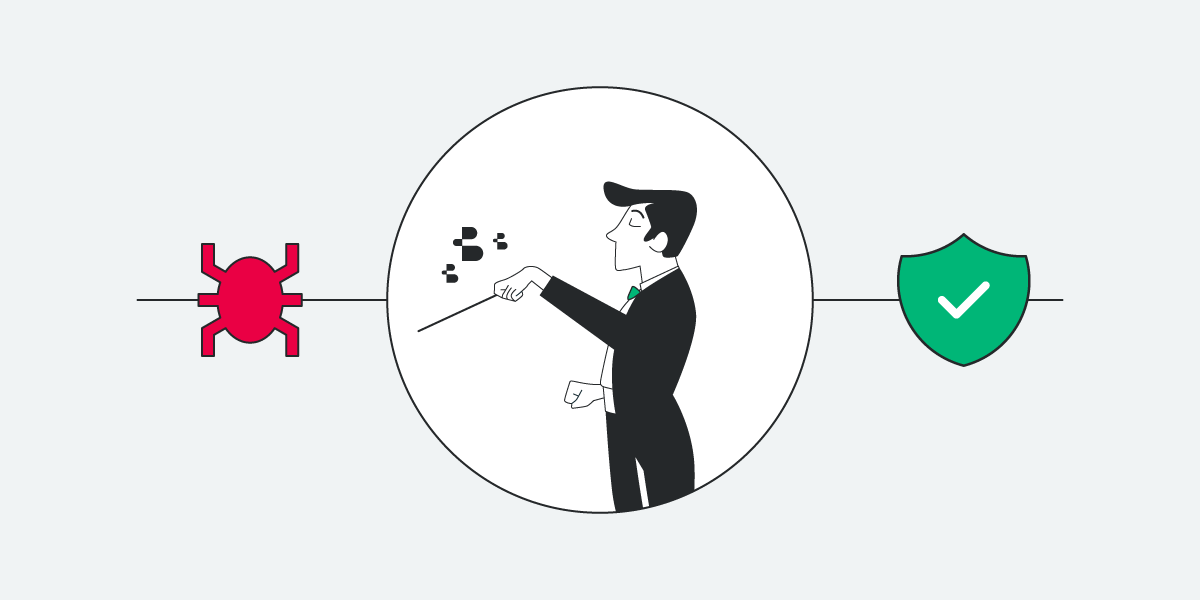
It’s like asking a musician to play, compose, tune instruments, attend to the audience, check the wiring, and also conduct the orchestra.
The melody is lost and everything sounds like noise
Batuta: centralized orchestration
The answer that 2025 shows us is not “add more security.” It is orchestration.
What we need is not another console, but a platform that:
- Bring everything together
- Turn chaos into clarity
- Automate repetitive tasks
- Eliminate blind spots
- Reduce analyst workload
- Enable each piece of security to work in coordination, not in isolation
That is precisely what Batuta seeks to achieve: to be the orchestra director in an environment where each instrument is playing on its own.
Batuta helps transform:
- Noise in Visibility
- Overload in Efficiency
- Fragmentation in Harmony
Because modern security isn’t about how many tools you have, but how well they work together.
Tactical recommendations to close out the year:
- Check dependencies and suppliers (the new favorite entry point).
- Consolidate tools to reduce noise.
- Automate detection and response processes.
- Maintain continuous monitoring of equipment and configurations.
- Train teams and users on new AI scams: fake voices, fake videos, and simulated chats.
- Free analysts from manual tasks so they can focus on what’s important.
Conclusion
2025 shows us the future of cybercrime: automated attacks, perfect scams, and operations that function as a global industry. It also shows us our main internal enemy: the noise we ourselves generate by accumulating disconnected solutions.
Now the question that closes this year is direct and decisive:
Will we continue to drown in noise… or will we begin to lead the melody of our digital protection?